Berberine has spent the last few years moving from niche supplement shelves into mainstream wellness conversation, largely on the strength of oral-dose research into blood sugar and metabolic markers. Purisaki has taken that ingredient and put it into a different format entirely: a wearable patch instead of a capsule. If you’re searching for “Purisaki Berberine Patches buy official website and discount,” you’re probably trying to answer two things at once — does this actually work, and is it safe to order from. This review tries to answer both without skipping the uncomfortable parts.
We’ll go through what the product claims, what berberine research actually supports, where the patch format runs into open questions, and what the pricing and return terms look like — so you can decide with the full picture rather than just the sales page
Disclosure: This article contains affiliate links. If you purchase through them, we may earn a commission at no extra cost to you. That doesn’t change what’s written here — the concerns below are included regardless of whether it affects a sale.
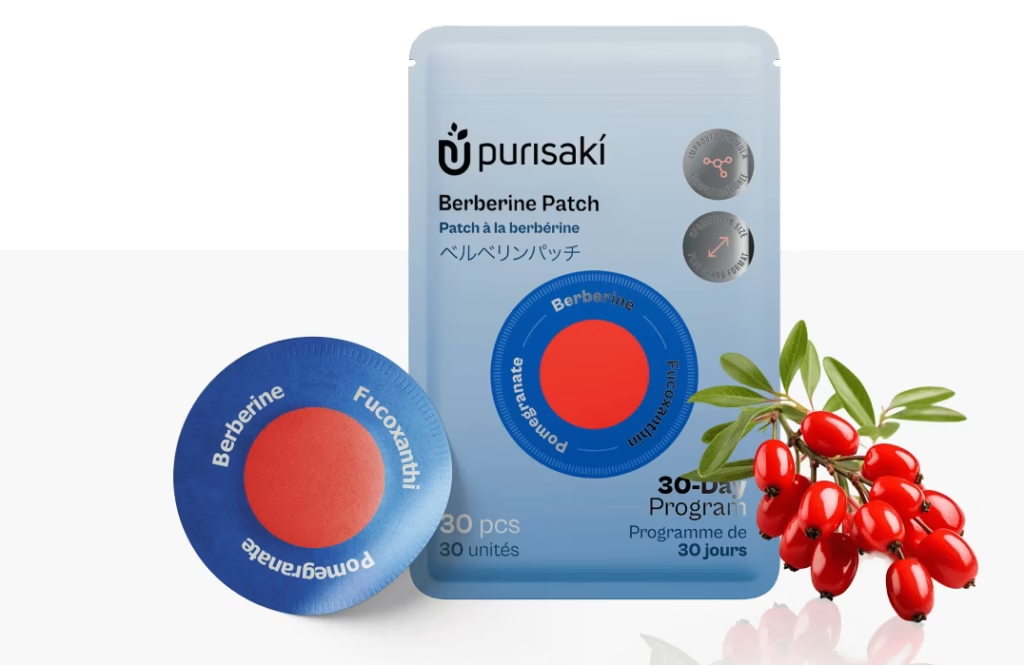
Quick Overview
| Category | Details |
|---|---|
| Product | Purisaki Berberine Patches |
| Format | Transdermal (skin-applied) patch, worn ~8 hours/day |
| Core ingredient | Berberine (plant alkaloid) |
| Other listed ingredients | Botanical blend (varies by seller listing — e.g., fucoxanthin, pomegranate extract, other plant extracts) |
| Claimed use | Metabolic support, blood sugar support, appetite/weight management support |
| Starting price | Around $15.99–$34.99 per pack depending on bundle and seller page |
| Return policy | 60-day money-back guarantee (RMA authorization typically required) |
| Regulatory status | Not evaluated by the FDA as a finished product; statements are not FDA-approved |
Prices, bundle sizes, and even some ingredient lists vary noticeably between the different seller pages currently promoting this product — worth noting up front, and worth double-checking on whichever page you land on before you buy.
What Berberine Actually Is (and What the Research Covers)
Berberine is a naturally occurring alkaloid found in plants like barberry, goldenseal, and Oregon grape root. It’s one of the more researched plant compounds in the metabolic-health space, with a real body of clinical literature — almost all of it involving oral berberine (capsules or powder), typically dosed multiple times a day, often in the 500mg–1500mg/day range studied in trials.
That oral research has looked at markers like fasting glucose, insulin sensitivity, and lipid levels, with generally positive but mixed-magnitude results depending on the study population and dose. It’s a legitimate compound to be interested in.
What that research does not cover is berberine delivered through the skin. This is the part worth sitting with before assuming a patch behaves the same way pills do.
How the Patch Is Supposed to Work
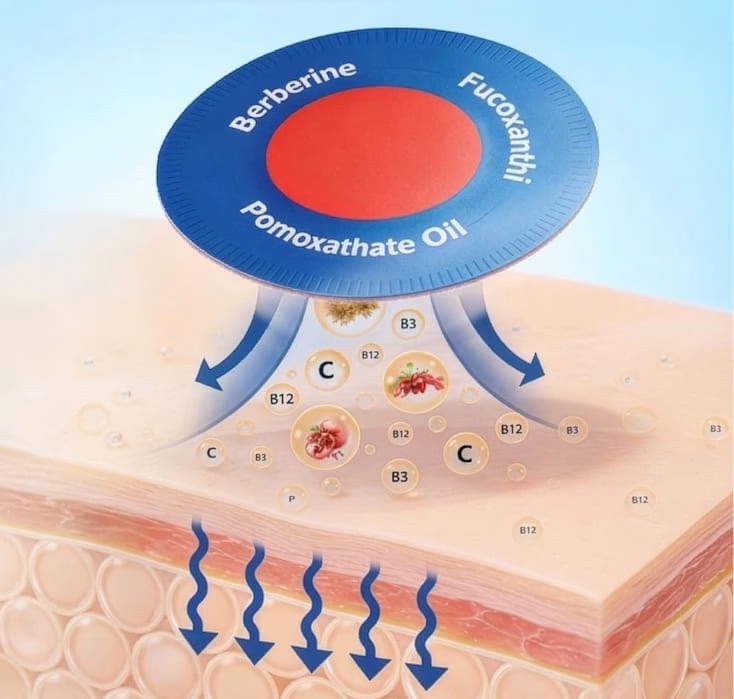
According to Purisaki’s own marketing, the patch uses a multi-layer adhesive design that releases berberine and companion botanicals gradually over an 8-hour wear period, applied to areas like the inner arm, lower abdomen, or sole of the foot. The pitch is straightforward: skip the digestive system, skip pill fatigue, get a steady release instead of a single spike-and-fade dose.
That’s a reasonable-sounding mechanism in theory. Plenty of legitimate transdermal products exist — nicotine patches and some hormone patches, for example, genuinely do work this way. The open question specific to this product is whether berberine, as a molecule, is actually well-suited to that delivery route.
Here’s the honest technical wrinkle: berberine is a relatively large, positively charged (cationic) alkaloid. Molecules like that generally have a harder time passively crossing the skin barrier compared to small, lipid-soluble compounds like nicotine. That doesn’t mean it’s impossible — specialized transdermal formulations can sometimes work around this with enhancers or particular delivery matrices — but it does mean the claim needs product-specific evidence to back it up, not just a general “transdermal delivery works for other things” argument.
As of this writing, Purisaki has not published finished-product absorption or bioavailability data (e.g., blood serum levels showing berberine actually reaching circulation from the patch) that would confirm the mechanism works as marketed. That’s a meaningful gap, and it’s the single most important thing to know before ordering.
Ingredients (As Listed by the Brand)
| Ingredient | Commonly cited role | Research status |
|---|---|---|
| Berberine | Core active; associated with glucose/lipid metabolism in oral studies | Researched orally; not researched transdermally in this product |
| Fucoxanthin (listed on some seller pages) | Marine carotenoid, studied in small trials for fat metabolism | Limited human evidence; mostly early-stage |
| Pomegranate extract (listed on some seller pages) | Antioxidant polyphenol source | General antioxidant research; not specific to this use case |
| Other proprietary botanicals | Vary by page | Not independently specified in most listings |
Because exact ingredient lists differ between the seller sites currently running (a sign worth noting on its own), we’d recommend checking the ingredient panel on the specific order page you’re about to purchase from, not just this summary.
Ikaria lean belly juice review weight loss product you can read here.
Pros and Cons
Potential upsides:
- Convenience — no pills to swallow or remember multiple times a day
- May suit people who get stomach upset from oral berberine capsules (a known, fairly common complaint with oral berberine)
- 60-day return window gives room to try it without much financial risk if the process is followed correctly
- Contains a genuinely studied compound (berberine) rather than an obscure or unresearched ingredient
Real drawbacks to weigh:
- No published absorption data proving the patch delivers meaningful berberine into the body
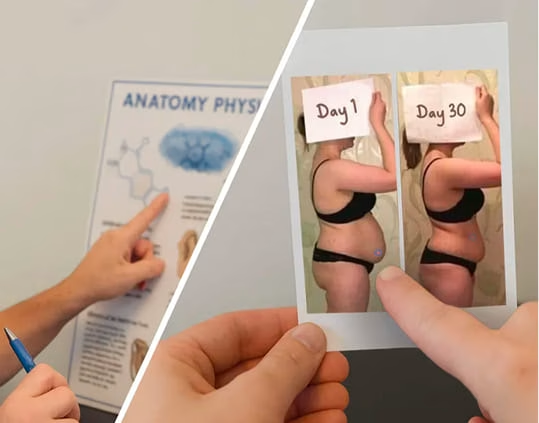
- Marketing language on some pages (e.g., specific monthly weight-loss figures) goes further than what’s demonstrated for this product
- Ingredient lists and pricing aren’t fully consistent across the multiple seller sites currently promoting it
- Company background (manufacturing/fulfillment location) isn’t always clearly stated, and differs from some on-page “Made in USA” claims — worth verifying directly with customer service before ordering
- Subscription/auto-ship terms have drawn complaints in third-party consumer reports; read the checkout page terms carefully before entering payment details
Pricing and Return Policy
Pricing shifts depending on which bundle and which of the currently active seller pages you order from, generally starting somewhere in the $15.99–$34.99 range for a smaller pack, with multi-pack bundles priced lower per unit. A 60-day money-back guarantee is commonly advertised, usually requiring you to request a return authorization (RMA) before sending anything back — don’t skip that step, since returns sent without authorization are often rejected.
If a subscription or auto-renew option is offered at checkout, read that section specifically. Several independent consumer write-ups on this product flag confusion around recurring billing, so it’s worth confirming exactly what you’re agreeing to before completing payment.
Who Might Consider Trying This
This may be worth considering if you:
- Already tolerate or are curious about berberine and simply dislike swallowing capsules
- Want to try a lower-commitment format with a return window as a safety net
- Understand you’re testing a delivery method that doesn’t yet have independent, product-specific proof behind it
It’s probably not the right fit if you:
- Are looking for a clinically proven route to blood sugar or weight management support (oral berberine, under medical guidance, has more evidence behind it at this point)
- Take medications that interact with berberine (it has known interactions with certain drugs metabolized through the liver — this is worth a conversation with a pharmacist or doctor regardless of delivery format)
- Aren’t comfortable buying from a product with inconsistent claims across its own marketing pages
Realistic Expectations
Individual results vary, and that’s genuinely true here — not just a disclaimer. Given the lack of finished-product absorption testing, it’s reasonable to go in with modest expectations rather than assuming patch delivery performs identically to oral capsules. Some users may notice the convenience benefit alone (skipping pills) as the main practical upside, separate from any metabolic effect.
If you do try it, tracking your own baseline (weight, energy, how you feel) before starting gives you a more honest read than relying on marketing copy alone.
Final Verdict
Purisaki Berberine Patches use a real, studied compound in a delivery format that hasn’t yet been independently proven to work the way it’s marketed. The convenience angle is legitimate for people who struggle with oral supplements, and the return window reduces some of the financial risk of testing it yourself. But the absence of product-specific absorption data, plus inconsistencies across the brand’s own marketing pages, means this sits more in “worth trying cautiously with your eyes open” territory than “proven solution.”
If you decide to go ahead, buying through the official checkout, keeping your order confirmation, and reading the return/subscription terms before paying will put you in the best position either way.
Check current pricing and availability on the official site →
FAQ
Does berberine actually work for weight loss or blood sugar? Oral berberine has a real body of clinical research showing effects on glucose and lipid markers in some studies, though results vary by dose and population. This research is specific to oral forms, not patches.
Is there proof the patch delivers berberine into your bloodstream? Not published, as of this writing. The brand hasn’t released finished-product absorption or blood-serum data confirming the patch delivers berberine systemically the way oral capsules do.
Is Purisaki FDA approved? No supplement is “FDA approved” in that sense — supplements are regulated differently from drugs. The product’s statements haven’t been evaluated by the FDA, which is standard disclosure language across this product category, not unique to this brand.
Where is it made? Marketing pages aren’t fully consistent on this point. It’s worth contacting customer service directly for a clear answer before ordering if manufacturing origin matters to you.
What’s the return policy? A 60-day money-back guarantee is commonly advertised, typically requiring a return authorization (RMA) before sending the product back.
Are there side effects to watch for? Berberine (oral) is associated with occasional digestive upset in some users and has known interactions with certain medications. Skin patches carry the additional possibility of local skin irritation at the application site. Speak with a healthcare provider before starting, especially if you take other medications.

Emily Carter is a wellness researcher focused on ingredient transparency and evidence-based supplement analysis. She reviews metabolism and health products to help readers make informed decisions before purchasing.